Most reach arounds fail not because of grip or angle — but because the giver locks into one speed and never shifts. The receiver’s nervous system adapts to that constant input within minutes, sensory receptors stop firing at full intensity, and arousal flatlines. The clinical term for this is excitatory habituation, and it is the single most common reason a mechanically correct reach around produces a frustratingly mediocre result.
The solution is a structured, neuroscience-backed speed curve that treats velocity as the primary control variable — not grip, not pressure, not angle. When stroke speed is deliberately modulated across four distinct phases, the nervous system never adapts, vasocongestion reaches maximum capacity, and the final climax hits with compounding neurological intensity that a static rhythm cannot produce.
→ New to reach arounds? Start with the Ultimate Guide to the Reach Around Handjob. → First time? Read the Reach Around for Beginners first.
Why Speed Matters More Than Grip During a Reach Around
While grip pressure determines friction intensity on penile tissue, velocity dictates how the central and peripheral nervous systems interpret that friction. Speed modulation is the primary driver of escalating arousal — it directly manipulates the neural pathways responsible for transitioning from the excitement phase to the orgasmic plateau.
Neurological Habituation — Why Constant Speed Kills Sensation
The human nervous system adapts to constant, unchanging stimuli — a phenomenon known as neurological habituation. When a specific sensation is applied at a uniform rate over an extended period, the brain’s sensory receptors begin filtering it out as non-essential background noise.
At the central level, sexual stimuli processing involves the dopaminergic and serotonergic systems alongside critical subcortical regions — the amygdala, hypothalamus, and septal region. The septal region mediates human sexual drive and generates the subjective pleasurable response. However, if afferent signals from the dorsal nerve of the penis to the thalamus and somatosensory cortex remain entirely predictable in frequency, the neural firing rate actively decreases.
Over and Koukounas proposed an information-processing model demonstrating that sexual arousal fails to habituate only when cognitive and sensory processes remain dynamic and unstable. A constant speed during a reach around causes excitatory habituation — the neurological threshold for pleasure rises, and the current stimulation no longer suffices. Erection quality drops. Psychological engagement collapses.
The fix: sensory input must continuously fluctuate to prevent the brain from mapping and subsequently ignoring the pattern.
The Sensory Threshold Curve (Stimulus vs Response)
The penile skin contains two critical mechanoreceptor types:
- Meissner’s corpuscles — respond to light touch and low-frequency vibrations
- Pacinian corpuscles — respond to deep pressure and high-frequency vibrations
Both adapt rapidly to constant stimulation. A dynamic variation in stroke speed effectively resets the sensory threshold curve. Dropping the speed allows rapidly adapting receptors to recover baseline potential. When speed subsequently increases, receptors fire with renewed, unattenuated intensity.
Sensory thresholds are also heavily modified by psychological factors and autonomic arousal — a carefully modulated speed curve stimulates physical receptors and maintains deep cognitive engagement and anticipation.
How Stroke Speed Affects Erectile Vasocongestion
Erectile vasocongestion — engorgement of the cavernous bodies with blood — relies on the parasympathetic nervous system stimulating nitric oxide release, causing vasodilation and tumescence.
Speed acts as the primary regulatory mechanism for this response:
| Speed Range | Neural Response | Arousal Effect |
|---|---|---|
| Low (30–60 SPM) | High parasympathetic activation, Meissner’s engagement | Maximizes vasocongestion, sustains erection, deepens tactile awareness |
| Medium (60–120 SPM) | Mixed autonomic activation, threshold recalibration | Builds systemic tension, increases heart rate, maintains plateau |
| High (150–300 SPM) | High sympathetic activation, Pacinian dominance | Triggers ejaculatory reflex, rapid neuromuscular escalation |
Slow speeds promote deep relaxation and maximum arterial dilation. High speeds trigger a neurochemical shift toward the sympathetic system — required for climax but counterproductive if introduced too early. Premature sympathetic dominance causes vasoconstriction, reducing erection quality before tissues reach maximum capacity.
→ How grip interacts with speed: Reach Around Grip Styles: Complete Handbook.
The Slow Handjob Technique — Building From Zero
The foundational phase of any effective reach around relies on mastering the slow technique. Moving slowly is not merely psychological — it is a biomechanical and neurological strategy required to maximize vasocongestive capacity before introducing high-friction variables.
What Counts as “Slow” (Strokes Per Minute Baseline)
A “slow” pace is clinically defined as 30 to 60 strokes per minute (SPM) — approximately one complete stroke every one to two seconds. At this velocity, the receiver independently processes the sensation across different anatomical zones — base, shaft, corona, glans — without sensory blurring.
Slower speeds mimic the body’s resting physiological rhythms, keeping cardiovascular and respiratory rates in a state of relaxed arousal. Much like athletic rowing — where effective power at a low stroke rate requires deliberate force rather than momentum — a slow reach around requires the giver to focus entirely on muscle control and sustained contact. No gaps in the tactile feedback loop. Constant pressure throughout the entire stroke.
Slow Tease Handjob — Pressure Without Speed
When velocity is removed from the equation, pressure must take its place. A slow tease handjob relies on deep, localized pressure to the erectile tissues rather than friction from rapid surface movement. Tightening the grip slightly while moving at a drastically reduced pace bypasses the superficial Meissner’s corpuscles and targets deeper pressure sensors within the tunica albuginea and corpus spongiosum.
From behind, the physical angle allows the giver to pull anatomical structures upward and backward — mimicking the natural angle of a fully erect penis. The lack of speed prevents rapid habituation while increased pressure ensures the sensory threshold is consistently met.
Focus on: twisting motions, gentle squeezing at the base, and slow prolonged glides over the highly sensitive coronal ridge.
The Edging Plateau (Holding at 70% Arousal)
Edging requires bringing the receiver to approximately 70–80% of maximum arousal capacity and suspending them there. At 70%, clear physiological markers appear: deeper breathing, elevated heart rate, pelvic floor tension, pre-ejaculatory fluid.
If speed remains high at this juncture — climax is inevitable. By abruptly dropping to under 40 SPM, the giver prevents the sympathetic system from forcing climax. This “fast-to-slow” toggle is one of the most reliable edging patterns documented. Over multiple cycles, holding the receiver at this plateau dramatically amplifies the neurological intensity of the eventual release.
When Slow Works Best — Scenarios and Body States
| Scenario | Speed | Grip | Expected Duration |
|---|---|---|---|
| High Stress / Performance Anxiety | 30–40 SPM | Light to Moderate | 15–20 minutes |
| Morning Arousal | 40–50 SPM | Moderate, base-focused | 10–15 minutes |
| Prolonged Edging Session | 30–60 SPM | Variable (tightening on upstroke) | 20–45+ minutes |
| Post-Orgasm Refractory Period | 10–20 SPM | Extremely Light | 5–10 minutes |
→ Full execution technique: How to Give a Perfect Reach Around.
💧 Slow Technique Demands Zero-Friction Glide
Swiss Navy Silicone Lube — long-lasting, non-drying formula rated #1 for sustained manual stimulation. 4.8/5 stars.
Shop on EdenFantasys ➜The Fast Handjob Finish — Escalation Mechanics
While slow pacing builds the foundation, fast pacing acts as the required biological catalyst for the orgasmic reflex. The transition must be calculated — utilizing biomechanical efficiency to sustain velocity without premature muscle failure.
What Counts as “Fast” (Strokes Per Minute Threshold)
“Fast” is mechanically categorized as any rhythm exceeding 150 SPM, often peaking between 200 and 300 SPM during final escalation. At 200+ SPM, sensory input shifts dramatically — continuously triggered Pacinian corpuscles create a sensation of intense localized vibration rather than distinct strokes. This overwhelms the somatosensory cortex, forcing the autonomic nervous system to fully activate the sympathetic branch — biologically mandatory for ejaculatory muscle contractions.
Speed Handjob — Forearm Endurance Strategy
Sustaining 200–300 SPM from behind poses a significant biomechanical challenge. Relying on wrist alone guarantees rapid lactic acid buildup and cramping. The solution: lock the wrist in neutral and generate movement from the larger muscle groups.
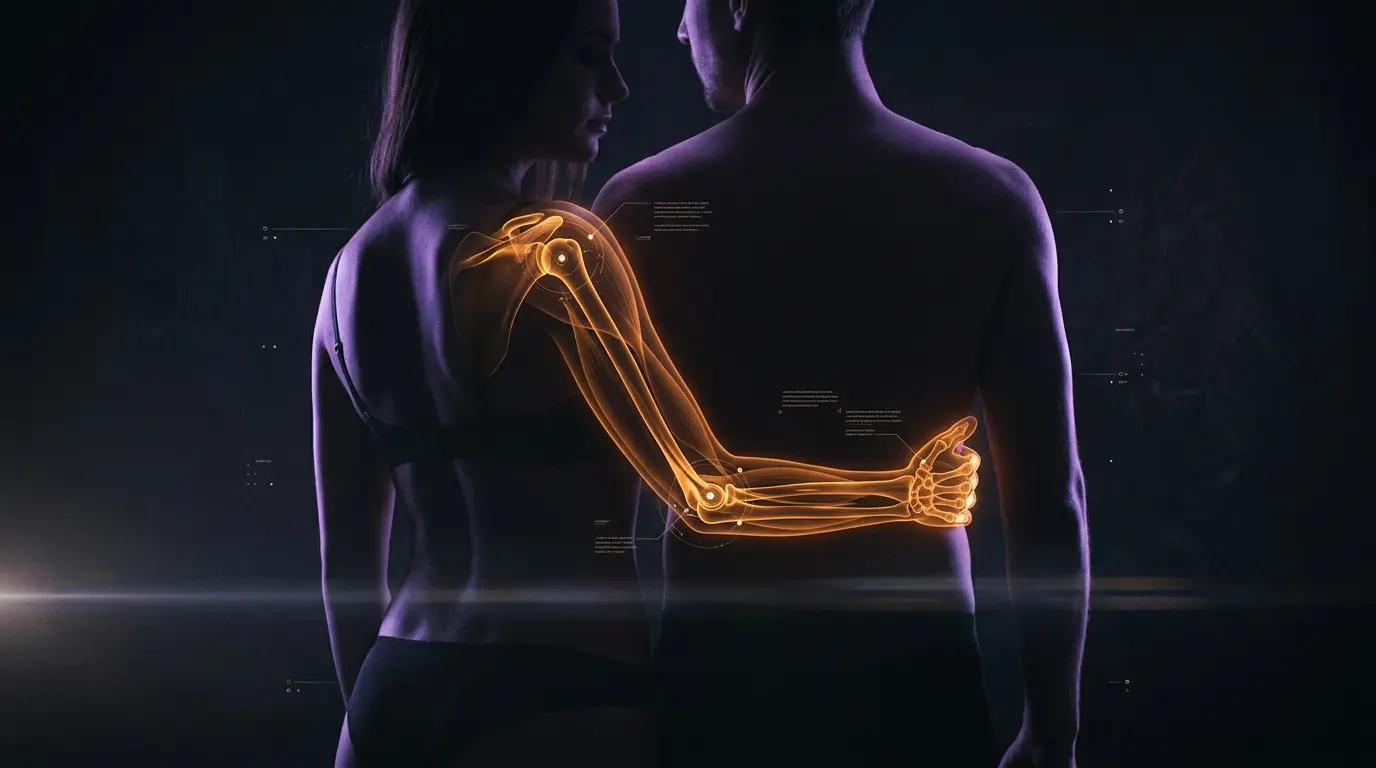
Press your torso firmly against the receiver’s back to stabilize the shoulder joint. The triceps and biceps function as pistons. This structural alignment prevents energy leak through a floppy wrist, ensuring maximum velocity transfers directly to the receiver without exhausting the giver’s ATP reserves.
The Final Sprint (Last 60 Seconds Before Climax)
Once the receiver enters the phase of inevitability, any sudden drop in speed halts the neurological cascade. During the final sprint:
- Narrow the range of motion — condense to short micro-strokes concentrated near the corona and frenulum
- Reducing stroke length mathematically allows higher SPM without additional exertion
- Maintain relentless consistency until physical contractions begin
- Then maintain speed but loosen grip to avoid overstimulating hypersensitive tissue
Avoiding the Death Grip at High Speed
As the giver increases speed, sympathetic motor neurons often cause involuntary finger clenching. Excessive pressure at high velocity creates severe dry friction and micro-tears, activating pain receptors instead of pleasure receptors.
Fix: Consciously relax fingers while isolating movement to the arm. Form a loose “O” shape. Copious lubrication is strictly required during the fast phase — the hand must glide at 300 SPM without tissue trauma.
| Speed Phase | Grip Pressure | Duration Cap |
|---|---|---|
| Initiation (150 SPM) | Firm but pliable | 3–5 minutes |
| Escalation (200 SPM) | Moderate, relaxing fingertips | 2–3 minutes |
| Final Sprint (250+ SPM) | Light, relying on lubrication | 60–90 seconds |
→ All grip and speed errors: Common Reach Around Mistakes.
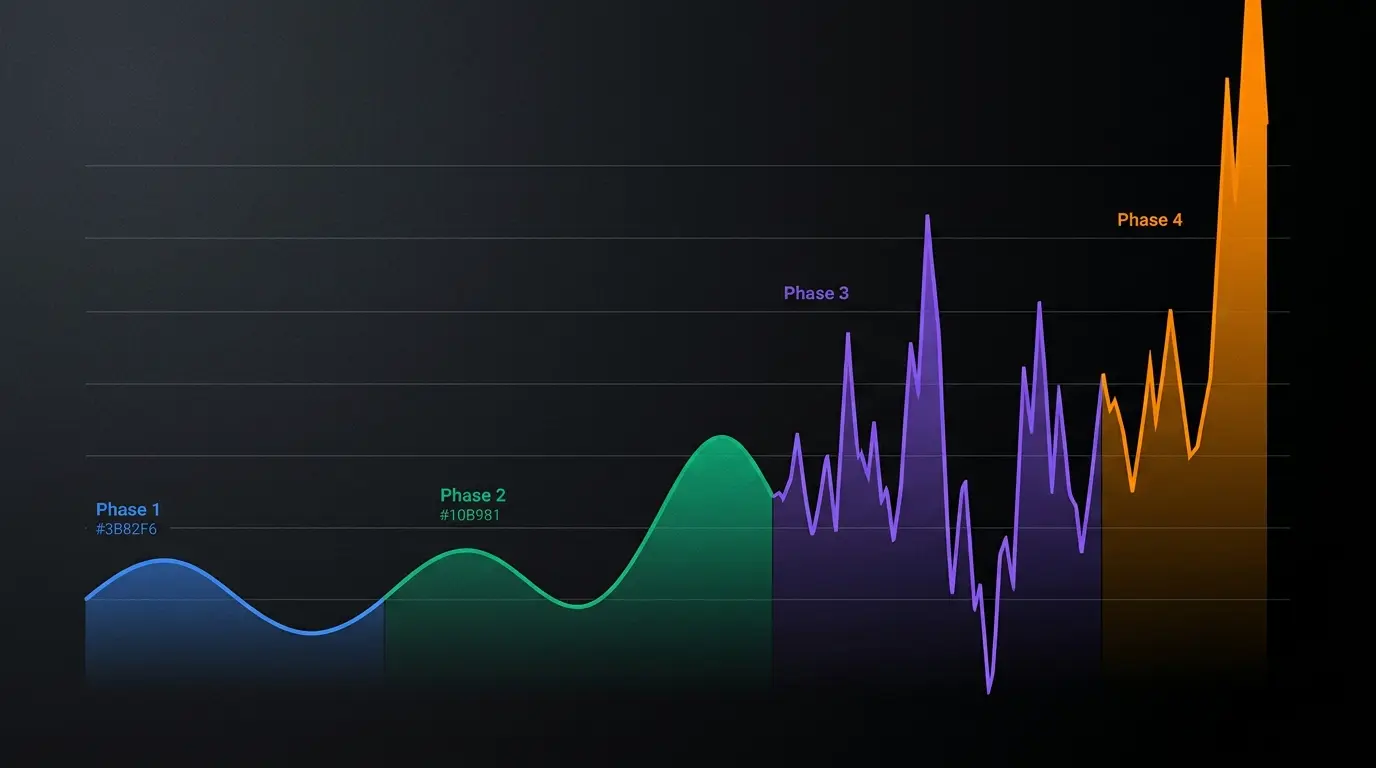
The 4-Phase Rhythm Map (Slow → Build → Peak → Finish)
Phase 1 — Warmup (0–3 min, slow tease handjob baseline)
Establishes physical trust, calibrates the sensory threshold curve, initiates parasympathetic response. Speed: strictly 30–60 SPM. Full range of motion. Moderate pressure. Neurological goal: flood sensory pathways with safe, pleasurable data, triggering dopamine release in anticipation of escalation. Relies entirely on slow-twitch (Type I) muscle fibers — preserving energy for later phases.
Phase 2 — Build (3–8 min, graduated speed increase)
As the receiver achieves full tumescence, transition to a graduated, linear increase: 60 to 120 SPM. Incorporate twisting motions and targeted pressure at the base. Heart rate and respiration increase steadily. By slowly turning the dial up, the giver avoids triggering habituation — constantly offering the nervous system slightly higher intensity than it expects.
Phase 3 — Peak Plateau (8–12 min, alternating speed)
The most neurologically complex phase. Bring the receiver to the absolute edge through highly variable pacing: accelerate to 180 SPM for thirty seconds, then precipitously drop to 50 SPM just as involuntary muscle tension appears.
This oscillation creates a highly charged state. The fast intervals push toward the sympathetic climax trigger while slow intervals allow just enough parasympathetic recovery to maintain erection rigidity. Repeat over multiple cycles.
Phase 4 — Finish (12+ min, fast handjob sprint)
Discard variability for relentless linear momentum. Increase to maximum sustainable rate (200–300 SPM). Shorten stroke length to focus on the glans and upper shaft — highest density of free nerve endings. No stops, no direction changes, no velocity drops until contractions have entirely ceased.
| Phase | Speed (SPM) | Pressure | Breathing |
|---|---|---|---|
| 1: Warmup | 30–60 | Moderate, exploratory | Slow, synchronized |
| 2: Build | 60–120 | Firm, twisting | Deep, steadily increasing |
| 3: Peak Plateau | Variable (50 ↔ 180) | Alternating | Rapid, mirroring receiver |
| 4: Finish | 200–300+ | Light to Moderate | Intense, unrestricted |
→ Standing position amplifies Phase 4: Standing Reach Around Handjob.
⚡ Add Passive Stimulation During Slow Phases
A vibrating cock ring delivers hands-free stimulation while you focus on rhythm control. 4.7/5 stars.
Shop Vibrating Rings ➜Reading the Receiver — Real-Time Speed Calibration
No rhythm map is universally applicable without real-time adjustments. Research indicates many individuals prefer communicating arousal states through somatic signals rather than verbal instructions — speaking disrupts cognitive immersion and pulls them out of bodily sensations.
5 Physical Cues That Signal “Speed Up”
| Physical Cue | Physiological Mechanism | Required Action |
|---|---|---|
| Hip Thrusting | Unconscious pelvic drive to force faster friction | Transition to Build or Finish phase (120+ SPM) |
| Increased Rigidity | Peak vasocongestion — tissue primed for escalation | Increase velocity; tissue handles higher friction |
| Vocalization Shifts | Transition from low moans to sharp gasps | Match intensity with corresponding SPM increase |
| Muscle Tensing | Involuntary thigh/glute tightening — neuromuscular preparation | Implement rapid strokes (200 SPM) |
| Pre-Ejaculatory Fluid | Bulbourethral gland activation from high arousal | Utilize natural lubrication to increase speed |
3 Physical Cues That Signal “Slow Down”
| Physical Cue | Physiological Mechanism | Required Action |
|---|---|---|
| Backing Away | Somatic reflex to avoid overwhelming stimuli | Drop to 30 SPM, loosen grip immediately |
| Rigid/Frozen Posture | Nociceptor activation from dry friction or death grip | Pause, apply lubrication, restart at slow baseline |
| Loss of Erection | Premature sympathetic vasoconstriction from stress/pain | Shift to parasympathetic warmup phase |
The Breathing Feedback Loop (Mirror Technique)
In a reach around, the giver’s chest presses directly against the receiver’s back — enabling the mirror technique. Synchronize your breathing with the receiver’s. Once locked:
- To prolong edging: deliberately slow and deepen your own breathing — the receiver’s autonomic system will unconsciously mimic, lowering heart rate and delaying climax
- To trigger finish: aggressively accelerate respiratory rate — acting as an auditory and tactile metronome driving arousal upward
Sensitive Handjob — Adapting for Post-Orgasm Sensitivity
Immediately following ejaculation, prolactin release and dopamine crash induce profound neurological hypersensitivity. Receptors that craved high-velocity stimulation now interpret further friction as intense discomfort.
Recalibrate instantly: Drop from 300 SPM to 10–20 SPM. Reduce to feather-light pressure. Avoid the hyper-sensitive glans entirely — focus on the base or perineum. This gentle deceleration prevents the jarring shock of a sudden stop while respecting the radically altered threshold curve.
→ All position angles for reading cues: Reach Around From Behind: Positions and Angles.
Position-Specific Speed Adjustments
The chosen position dictates biomechanical efficiency — which strictly limits or greatly enhances the maximum sustainable speed.
Spooning — Default Slow (Limited Range of Motion)
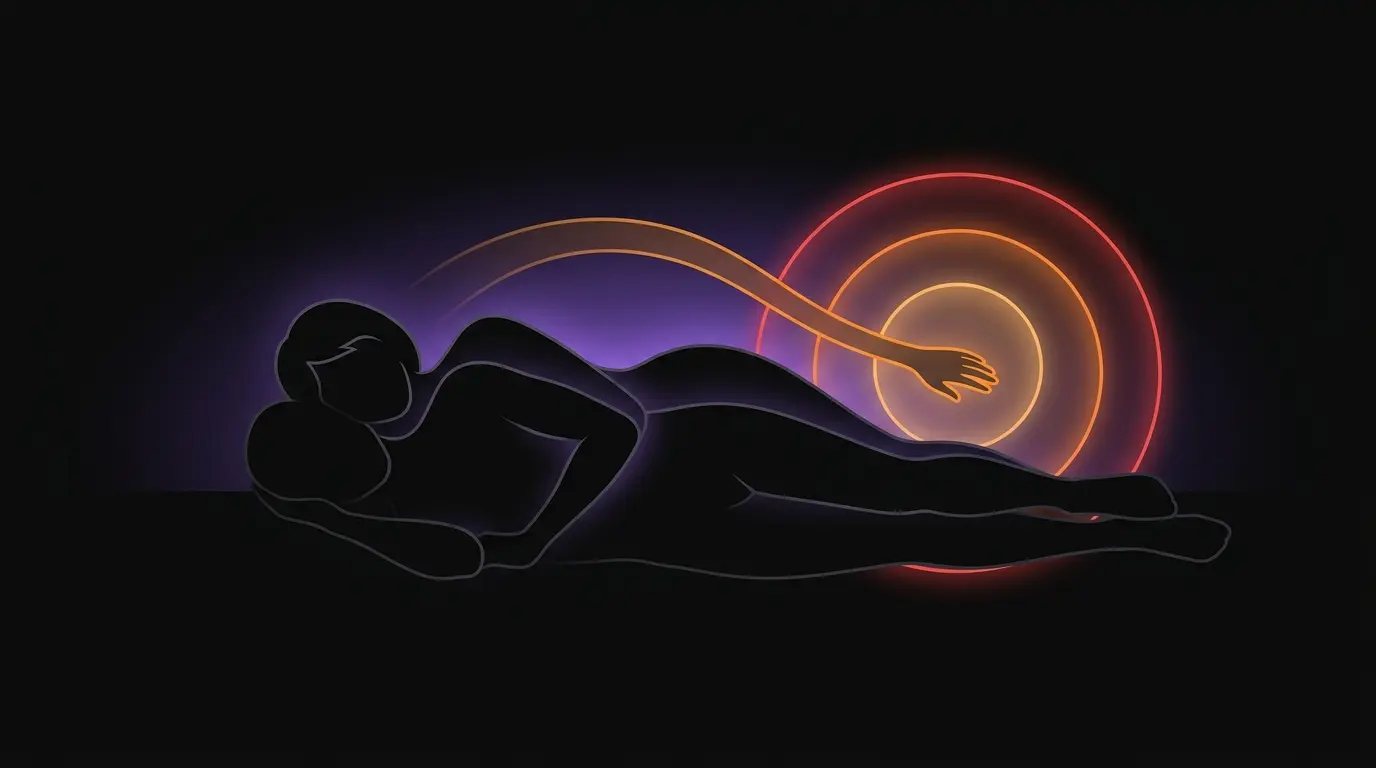
The giver’s arm is trapped beneath or draped over the receiver’s torso, restricting shoulder and elbow joints. Movement relies almost entirely on wrist flexion — which fatigues rapidly. Spooning naturally defaults to 30–80 SPM. Prioritize deep pressure and slow twisting motions. Ideal for warmup and build phases.
Standing — Default Fast (Hip-Driven Momentum)
The arm operates with full freedom and leverage. The standing position allows hip-driven momentum — lock the arm at a specific angle and generate power from the pelvis and torso. The massive muscles of legs and core completely eliminate forearm fatigue. Standing defaults to 150–300 SPM — ideal for the final sprint.
Seated — Variable (Full Arm Freedom)
If the receiver sits while the giver stands behind, the arm has an unobstructed downward angle — gravity assists stroke mechanics, reducing metabolic cost. The giver can seamlessly transition between slow tease and high-speed sprint without shifting base of support. Biomechanically ideal for the full 4-phase rhythm map.
| Position | Natural Speed | Fatigue Onset | Recommended Pattern |
|---|---|---|---|
| Spooning | Slow (30–80 SPM) | Rapid (Wrist isolation) | Deep pressure, twist mechanics |
| Standing | Fast (150–300 SPM) | Slow (Core/Hip driven) | High momentum, final sprint |
| Seated | Variable (30–300 SPM) | Moderate (Shoulder driven) | Full 4-Phase Map execution |
→ Full position rankings: Best Reach Around Positions Ranked by Difficulty.
🔥 Warming Lube — Amplify Slow-Phase Sensitivity
Thermal stimulation intensifies the warmup phase. Long-lasting warming formula. 4.6/5 stars.
Shop Warming Lube ➜Common Rhythm Mistakes
❌ Starting Too Fast (Skipping Warmup Phase)
Initiating at 150 SPM before the vascular system has properly engorged the tissue is counterproductive. Rapid friction on semi-erect skin triggers a localized stress response — norepinephrine release actively constricts blood vessels and prevents full erection. The nervous system requires the gradual ramp-up of Phase 1 to map the stimulus as pleasurable rather than invasive.
❌ Never Changing Speed (Neurological Flatline)
A monolithic 100 SPM that never deviates guarantees excitatory habituation. The brain optimizes processing to eventually ignore that exact frequency. The receiver feels friction superficially — but subjective arousal plummets. The nervous system demands surprise, variability, and dynamic shifts to keep cognitive processing engaged.
❌ Ignoring Breathing Sync
Failing to monitor respiratory rate creates total disconnect. If the receiver breathes rapidly (highly aroused, near threshold) and the giver slows down arbitrarily — extreme frustration. If the receiver’s breathing slows and the giver blindly accelerates — unwanted premature climax. Breathing is the ultimate real-time telemetry data.
❌ Using Dry Friction at High Speed
At low speeds, skin elasticity can accommodate a dry hand. At 300 SPM, the coefficient of friction increases exponentially. High-speed strokes without lubrication generate rapid heat and shear force that strip delicate mucosal layers — replacing pleasure with burning pain. Premium lubricant is not an accessory — it is a strict mechanical requirement.
→ Full mistake catalog: Common Reach Around Mistakes.
Frequently Asked Questions
Is a slow handjob better than fast?
Neither is objectively superior — they serve completely different neurological functions. Slow pace (30–60 SPM) builds vasocongestion, establishes parasympathetic dominance, and amplifies sensory awareness. Fast pace (150–300 SPM) is biologically necessary to trigger the sympathetic ejaculatory reflex. Highest efficacy is achieved by utilizing both dynamically in a structured sequence.
How fast should a speed handjob be?
To cross the orgasmic threshold, the fast phase should sustain 150 to 300 SPM. This speed is only effective when heavily lubricated to prevent tissue damage. Generate speed from the forearm and shoulder — not isolated wrist — to avoid early muscle failure.
How do you edge with a reach around?
Bring the receiver to 70% arousal — identified by rapid breathing, involuntary tension, and maximum rigidity — then deliberately drop speed from high velocity to under 40 SPM. This prevents pelvic floor muscles from fully contracting into orgasm. Hold the receiver at this plateau by repeatedly toggling between moderate acceleration and slow, heavy-pressure teasing over multiple cycles.
Does lube affect handjob speed?
Absolutely. Lubrication dramatically alters the coefficient of friction. Premium silicone-based formulas create a protective barrier allowing 300 SPM without triggering the death grip reflex or causing micro-tears. Without lubrication, safe operating speeds are restricted to the extreme lower end of the spectrum.
How long should a reach around last?
A properly executed 4-phase rhythm map generally lasts 12 to 20 minutes. Warmup and build occupy the first 8 minutes for proper engorgement and neurological mapping. Extended edging sessions can stretch the peak plateau to 30–45 minutes. The final sprint rarely exceeds 60–90 seconds once inevitability is reached.
Key Takeaways
The fundamental mechanics of an optimal reach around rely on respecting the physiological requirements of the human nervous system:
- Dynamic speed variation prevents habituation — a single unchanging speed will numb arousal pathways within minutes. Dynamic shifts recalibrate the sensory threshold curve, keeping the brain actively engaged
- Slow building is non-negotiable — operating at 30–60 SPM prioritizes the parasympathetic nervous system, allowing maximum vasocongestion and harder, more sustained erections prior to climax
- Speed is the biological trigger for the finish — velocities exceeding 150 SPM activate the sympathetic system and Pacinian corpuscles, biologically necessary for the ejaculatory reflex
- Biomechanics dictate sustainability — high-speed pacing must be driven by forearm, shoulder, and hips to prevent wrist fatigue, utilizing the entire kinetic chain
- Monitor the autonomic feedback loop — real-time calibration through physical cues and the mirror breathing technique allows direct modulation of the receiver’s arousal state
🎁 Complete Reach Around Starter Kit
Everything you need — silicone lube, vibrating ring, and bullet vibrator. Free shipping on orders over $50.
Shop EdenFantasys ➜