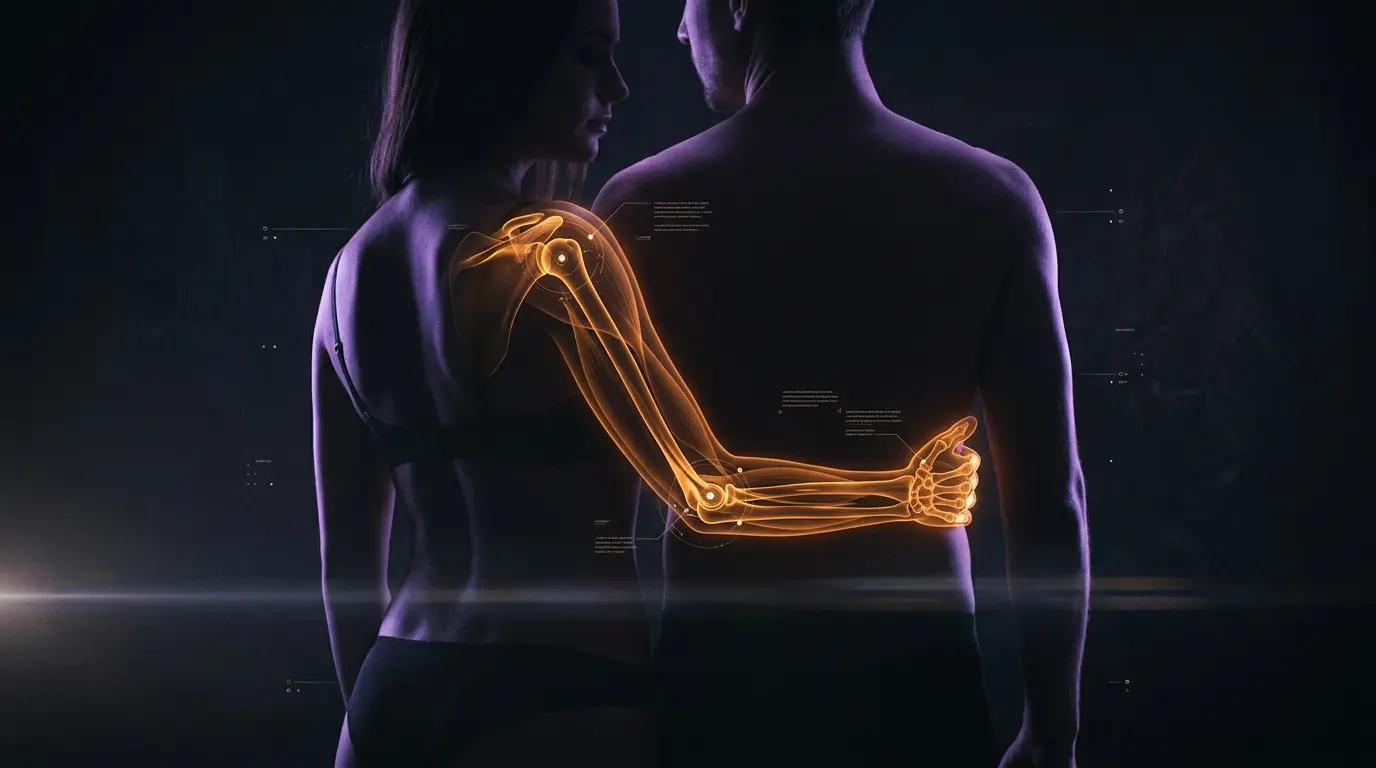
A handjob from behind rewires every signal the nervous system expects.
The angle shifts. Visual control disappears. The body compensates by amplifying touch — and that reconfiguration of sensory input is precisely why the reach around handjob is in a category entirely its own.
This guide breaks it down from first principles: the anatomy of the grip, the three structural positions, when it outperforms standard technique, and how it functions within power-dynamic contexts.
In this article:
- What a reach around handjob is and where the term comes from
- Reach around vs regular handjob — the core biomechanical differences
- The 3 main positions and their structural advantages
- When a reach around actually feels better (and why neurologically)
- Common challenges and exact fixes for each
- The femdom reach around in dominant-submissive contexts
- 5 beginner tips for immediate use
- 8 FAQ answered clinically
What Is a Reach Around Handjob? {#definition}
A reach around handjob is manual genital stimulation performed from a rear position — the giving partner’s arm extends around the recipient’s body to access the genitals from behind.
That single positional change restructures almost everything else:
- Grip angle shifts from pronated (frontal) to supinated or rotated (posterior)
- Visual input is eliminated for the recipient, forcing full reliance on touch
- Physical proximity becomes mandatory — chest to back contact is required
- Sensory processing concentrates at the frenulum rather than broad shaft friction
The result is not a variation of a standard handjob. It is a distinct sensory experience driven by different neurobiology.
Where the Term Comes From
Historical lexicography — including Green’s Dictionary of Slang — traces early use of “reach around” to mid-20th-century vernacular, initially describing manual stimulation provided during rear-entry intercourse.
The term later crossed into non-sexual idiom (describing a gesture meant to smooth over unfair treatment) and even sports kinesiology (a basketball passing style around a defending player). In clinical and relationship contexts today, the phrase almost exclusively denotes the rear-oriented manual technique.
Reach Around vs Regular Handjob — The Core Differences {#comparison}
Understanding the comparative anatomy requires examining grip geometry, spatial intimacy, and how the nervous system interprets each.
Angle & Grip: The Frenulum Factor
In a frontal technique, the giving partner uses a pronated or neutral wrist, distributing pressure broadly across the dorsal and ventral shaft. The thumb rests passively.
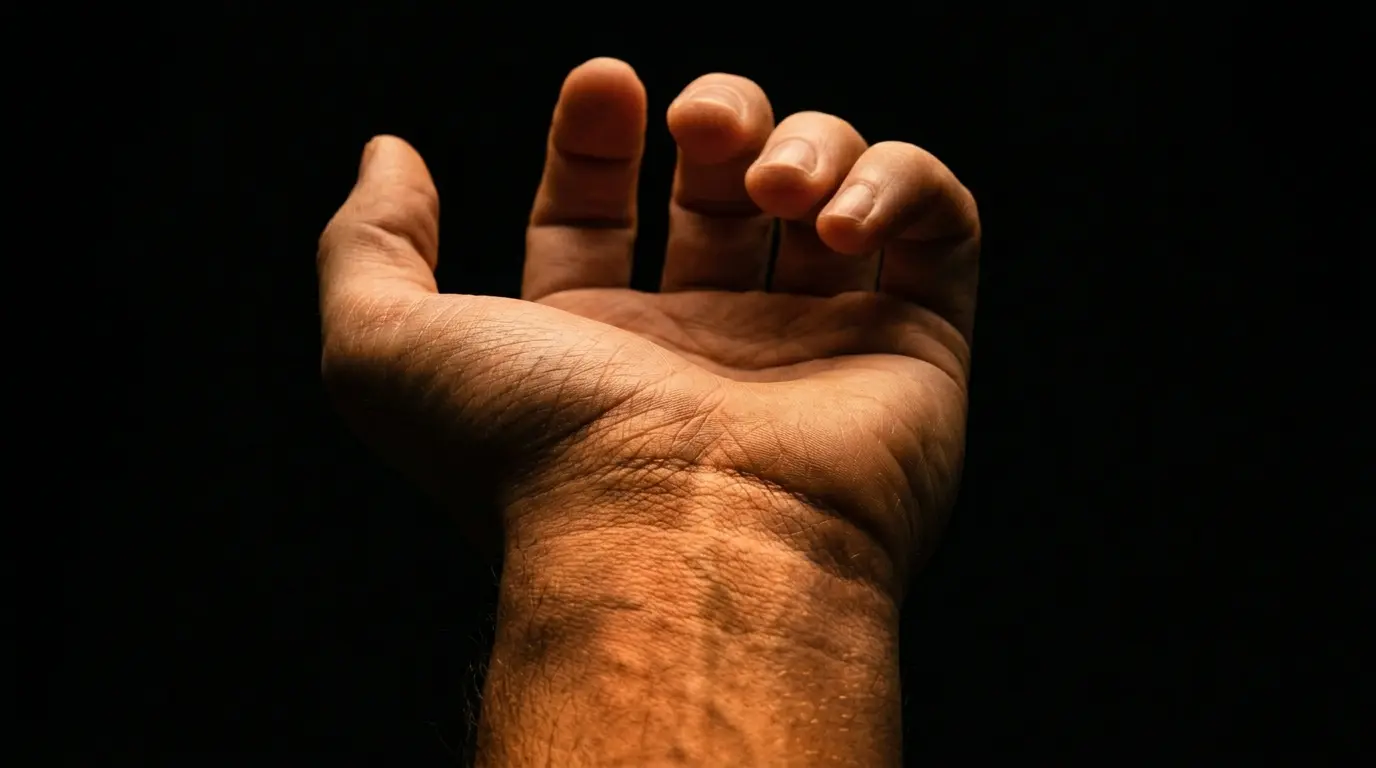
Extending the arm from behind forces a supinated or hyper-rotated wrist — and this inversion completely changes which hand tissue contacts which anatomical zone.
The thumb and distal pads of the index and middle fingers are naturally driven into the ventral side of the penis, directly isolating the frenulum.
The frenulum contains the highest density of Pacinian receptors on the shaft — nerve endings specifically tuned to pressure changes and micro-vibrations. Posterior grip isolates this tissue by structural necessity, making the sensation fundamentally different even at identical speed and pressure.
| Parameter | Regular Anterior Technique | Reach Around Technique |
|---|---|---|
| Hand angle | Frontal, neutral/pronated wrist | Posterior/lateral, supinated or rotated |
| Primary friction zone | Full shaft, global pressure | Ventral shaft, targeted frenulum |
| Visual pacing | High — visual feedback guides rhythm | Eliminated — tactile/auditory only |
| Physical proximity | Variable (can be performed at distance) | Mandatory (chest-to-back contact) |
| Sensory profile | Familiar, broad, visually guided | Novel, intense, tactile-dominant, localized |
Body Position & Proximity
A frontal handjob can occur at physical distance. The reach around cannot.
Chest-to-back contact mirrors the principles of sensate focus — a sexological framework that shifts attention away from performance and toward immersive physical sensation. The full posterior chain (back, shoulders, hips) becomes part of the sensory experience, not just the hands.
Level of Intimacy: The Neurobiology
When a person cannot visually track the hands stimulating them, the brain compensates by heightening somatosensory cortex activity. Sensory redistribution forces psychological surrender, and the back-to-chest orientation promotes nervous system co-regulation.
As breathing synchronizes and body heat merges, the parasympathetic system activates — triggering oxytocin secretion (the bonding hormone) at a rate anterior methods rarely match.

3 Main Positions for a Reach Around Handjob {#positions}
Position determines biomechanical advantage, muscular endurance, and anatomical access. Each offers a structurally different experience.
1. Standing Reach Around Handjob
Most dynamic. Highest physical demand.
The recipient stands upright — bracing against a wall, furniture, or bed edge for balance. The giving partner approaches from behind, aligning chest to back.
Structural advantage: Full-body mobility. The giver can use hip movement to synchronize manual strokes with broader bodily contact, intensifying physical connection.
Challenges to manage:
- Arm suspended mid-air → deltoid and forearm fatigue onset faster
- Height disparities significantly affect accessibility
- Generous lubrication essential before contact due to inverted angle
→ See detailed technique: Standing Reach Around Technique
2. Spooning / Lying Down
Optimal for extended sessions and nervous system engagement.
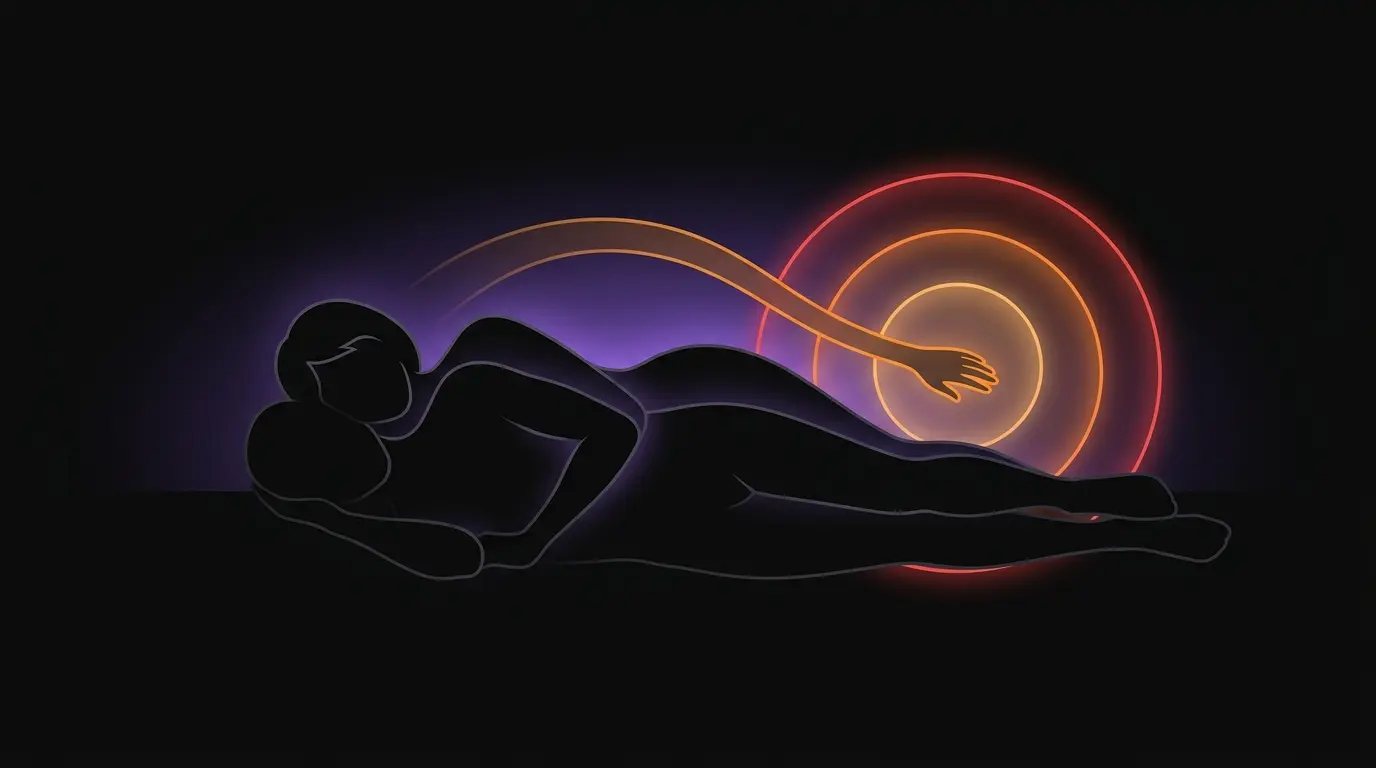
Both partners lie laterally, same direction. The “big spoon” (giver) drapes their upper arm naturally across the receiver’s hip, giving unimpeded access with gravity-supported arm position.
Structural advantage: Forearm flexors do not need to maintain isometric tension. The receiver’s body supports the arm entirely — enabling micro-movement techniques (such as “texting fingers” across the frenulum) that would cause rapid cramping in other positions.
Additionally: reduced visual processing load for both partners → synchronized breathing → deeper parasympathetic activation.
3. Seated Reach Around
Best anatomical access. Excellent stamina.
The giver sits upright (chair, bed edge, or floor). The receiver sits between their legs, leaning back into the giver’s chest.
Structural advantage: Arms wrap symmetrically, elbows can rest on knees or the receiver’s hips — reducing arm fatigue while maintaining bilateral access. This position opens the perineum and makes prostate stimulation straightforward to add.
One hand manages the shaft. The other is free for the pelvic floor. The sensory overload from simultaneous stimulation is sustainable because the giver’s posture removes the fatigue variable.

Step-by-Step: Standing Reach Around Technique
- Recipient stands feet shoulder-width apart — stable biomechanical base
- Giver approaches from behind, chest aligned to recipient’s back
- Giver extends dominant arm around hip or waist — shoulder relaxed, not tense
- Apply generous lubrication before contact (inverted grip increases frictional resistance)
- Begin with slow, finger-led strokes — micro-adjust wrist angle to maintain ergonomic neutrality throughout
When Does a Reach Around Feel Better? {#when-to-use}
There are specific physiological and emotional contexts where this technique measurably outperforms frontal stimulation.
When Physical Closeness Is the Primary Goal
Modern sex therapy distinguishes performance-oriented acts from connection-oriented acts. The reach around is optimized for the latter.
Full chest-to-back contact engages deep pressure therapy pathways — similar to a weighted blanket — signaling the amygdala to suppress cortisol production. When partners need to reconnect after emotional distance, or when performance anxiety is present, the enveloping, visually-removed nature of the position provides a degree of grounding that frontal techniques cannot replicate.
During Other Activities (Multitasking)
The posterior approach leaves anterior and inferior erogenous zones entirely accessible. This makes it the default manual technique for:
- Rear-entry intercourse — simultaneous penile stimulation during penetration
- Prostate play — one hand on shaft, one accessing the pelvic floor without contortion
- Anal stimulation — reach around eliminates the need for spine-twisting lateral reach
Dual-stimulation at separate erogenous zones creates compounded arousal that isolated stimulation rarely achieves.
Power Dynamic Scenarios
In femdom reach around contexts, the biomechanics of rear positioning serve a psychological function beyond physical technique.
The dominant partner positions entirely behind the submissive → recipient cannot see what’s coming or when → forced sensory deprivation generates intense anticipatory tension → control of the submissive’s most vulnerable anatomy becomes the mechanism of power.
This psychological architecture is why the technique is foundational in female-led relationships and edge-play contexts.
→ Read in depth: Femdom Reach Around Handjob Guide
Reach Around Challenges & How to Fix Them {#challenges}
Challenge 1: Arm Fatigue
Forearm cramping is the most frequently cited physical limitation. The inverted wrist angle and extended arm position place unusual load on the forearm flexors — similar to the “arm pump” experienced by climbers or wakeboarders.
Fatigue accelerates when the giver:
- Maintains unnecessary shoulder or neck tension (“riding tense”)
- White-knuckles the shaft (over-grips the flexor digitorum superficialis)
- Holds breath during physical exertion
Fixes:
- Maintain neutral wrist alignment — the same principle athletes use adjusting brake levers to prevent fatigue
- Initiate movement from the shoulder blade (scapular retraction), distributing load to larger upper-back muscles
- Breathe continuously — rhythmic oxygenation prevents lactic acid accumulation in forearm flexors
- Switch hands before fatigue peaks, not after
Challenge 2: Grip Angle Feels Awkward
Attempting to replicate a full-fist frontal stroke from a posterior position is a kinetic fallacy. The geometry doesn’t transfer.
Fix: Abandon broad strokes entirely. Use fingertip micro-movements instead:
- Light pressure along the coronal ridge
- Swirling or side-to-side motion at the frenulum
- The “texting fingers” technique — thumbpad tap and glide on the ventral surface, mimicking the precise light pressure of typing on a phone
The awkward angle becomes a targeted tool when the technique shifts from gross motor to fine motor.
Challenge 3: Height Disparities in Standing Position
Significant height difference in standing reach around can cause:
- Shorter giver: elevated shoulder → rotator cuff strain
- Taller giver: lumbar flexion → lower back spasm
Fix: Use environmental elevation (step stool, platform, or widened stance to drop center of gravity). Or transition to the seated or spooning position, which eliminates vertical disparity entirely.
The Reach Around in Femdom Contexts {#femdom}

Why It’s a Staple in Female-Led Dynamics
In dominant-submissive relationships, arousal is frequently inseparable from the explicit transfer of power. The reach around’s structure enacts this transfer mechanically.
When a dominant partner executes a femdom reach around handjob:
- The submissive is physically prevented from retreating
- Their back is fully exposed
- Primary erogenous zones are under complete jurisdiction of the dominant
The dominant dictates pace, enforces edging protocols (orgasm denial), or introduces mild consensual pain with total spatial authority. The submissive’s inability to anticipate grip changes, pressure shifts, or withdrawal — combined with the physical weight of being enclosed from behind — generates the surrender state that defines power-exchange dynamics.
Combining With Other Techniques
The posterior vantage point allows simultaneous orchestration of multiple sensation inputs:
- Prostate stimulation with one hand + shaft control with the other creates muscle contractions exceeding standard orgasm intensity
- Breath control techniques (light neck pressure, hand-over-mouth) are accessible from this position without repositioning
- Vibrating prostate wand operated with one hand while the reach around controls the other creates a closed sensory loop the submissive cannot moderate
These combinations require anatomical knowledge, mutual trust, and active communication throughout. They represent advanced application of a technique that is already neurologically distinct at baseline.
Reach Around Tips for Beginners {#beginner-tips}
5 Essential Tips
- Start in spooning position — gravity supports the arm, wrist angle is easiest to control, and the position is forgiving while technique develops
- Use dominant hand — fine-motor control and tactile pressure sensitivity are significantly higher in the dominant hand
- Apply lube before reaching around — not during. Interrupting contact to apply lubricant breaks the tactile rhythm and reduces sustained arousal
- Ask about grip preference explicitly — the inverted angle places pressure differently for every individual; verbal confirmation prevents overcorrection
- Switch hands before cramping — transition while in motion, not after fatigue has already peaked
The Core Principle for Beginners
Treat this as a full-body practice, not a localized hand movement. Posture, breathing, body contact, and verbal cues all contribute to the experience.
Beginners who focus only on hand mechanics and ignore body positioning will hit the awkwardness ceiling quickly. Those who approach it as an integrated technique typically bypass the awkward phase within one or two sessions.
FAQ — 8 Questions About Reach Around Handjobs {#faq}
What exactly is a reach around?
A reach around is a manual stimulation technique performed from behind — the giving partner’s arm extends around the recipient’s torso to access the genitals from a rear angle. It requires closer physical proximity and uses an inverted grip compared to standard frontal technique.
Is a reach around harder to do than a regular handjob?
The technique presents distinct biomechanical challenges — particularly forearm fatigue and initial grip awkwardness from the inverted wrist angle. However, proper postural alignment and ergonomic joint positioning (neutral wrist, shoulder-initiated movement) eliminates these difficulties with practice.
What’s the best position for a reach around?
The lateral recumbent (spooning) position is biomechanically superior for most purposes. The giving arm is fully supported by the receiver’s body, gravity is neutralized, and fine-motor technique can sustain longer without fatigue. For power dynamics, standing is preferred. For combined stimulation, seated.
Why does a reach around feel more intimate?
The back-to-chest orientation requires the recipient to relinquish visual control — this engages the parasympathetic nervous system and triggers oxytocin secretion at rates frontal technique doesn’t achieve. Physical enmeshment and enforced sensory vulnerability create a neurobiological connection that anterior technique cannot replicate structurally.
Can you do a reach around while spooning?
Yes — spooning is the ideal position specifically because of this. The “big spoon” drapes their upper arm naturally across the receiving partner’s hip, and the arm is supported throughout. It’s the position of least physical strain and greatest sustained intimacy.
How do you avoid arm cramps during a reach around?
Prevent cramps by: maintaining neutral wrist alignment (not hyperextending), initiating movement from the shoulder blade rather than the wrist, breathing rhythmically throughout, avoiding white-knuckling (excessive grip tension), and switching hands proactively before fatigue peaks.
Is reach around common in femdom?
The technique is foundational in female-led relationships and dominant play. It places the dominant partner in complete positional control entirely outside the submissive’s visual field — maximizing feelings of vulnerability, anticipation, and sensory deprivation that define power-exchange arousal.
What lube works best for reach around handjobs?
High-quality silicone-based or hybrid lubricants are preferred. The inverted grip angle makes reapplication mid-session disruptive — long-lasting, sustained-glide formulas prevent the need for interruption.
→ Full comparison: Best Lubes for Reach Around Handjobs
Summary — Reach Around vs Regular: Which to Choose?
| Factor | Regular Handjob | Reach Around Handjob |
|---|---|---|
| Primary nervous system state | Sympathetic (active, visual, escalating) | Parasympathetic (relaxed, tactile, vulnerable) |
| Muscular demand (giver) | Low to moderate | Moderate to high (ergonomic technique required) |
| Best anatomical target | Full penile shaft, broad friction | Frenulum, ventral glans, perineum access |
| Psychological dynamic | Egalitarian, face-to-face | Immersive, enveloping, or dominance/submission |
| Integration capacity | Standalone or oral precursor | Exceptional for multitasking (anal/prostate play) |
The reach around handjob provides a synthesis of deep emotional intimacy, targeted anatomical stimulation, and psychological power dynamics that frontal technique cannot structurally replicate.
It is not a replacement for the standard approach — it is a different tool for a different goal.
💧 Upgrade Your Technique
The reach around angle requires a lube that won't dry out. Shop premium silicone and water-based lubricants with free shipping on orders $59+
Shop Premium Lubricants ➜Continue Reading
- → How to Give a Perfect Reach Around — complete technique walkthrough
- → Reach Around Grip Styles Ranked — every grip variation compared
- → Reach Around for Beginners — first-time complete guide
- → Positions & Angles Deep Dive — biomechanics of every posture
- → Best Lubes for Reach Around — sustained-glide formula guide
- → 30 Reach Around Questions Answered — complete FAQ