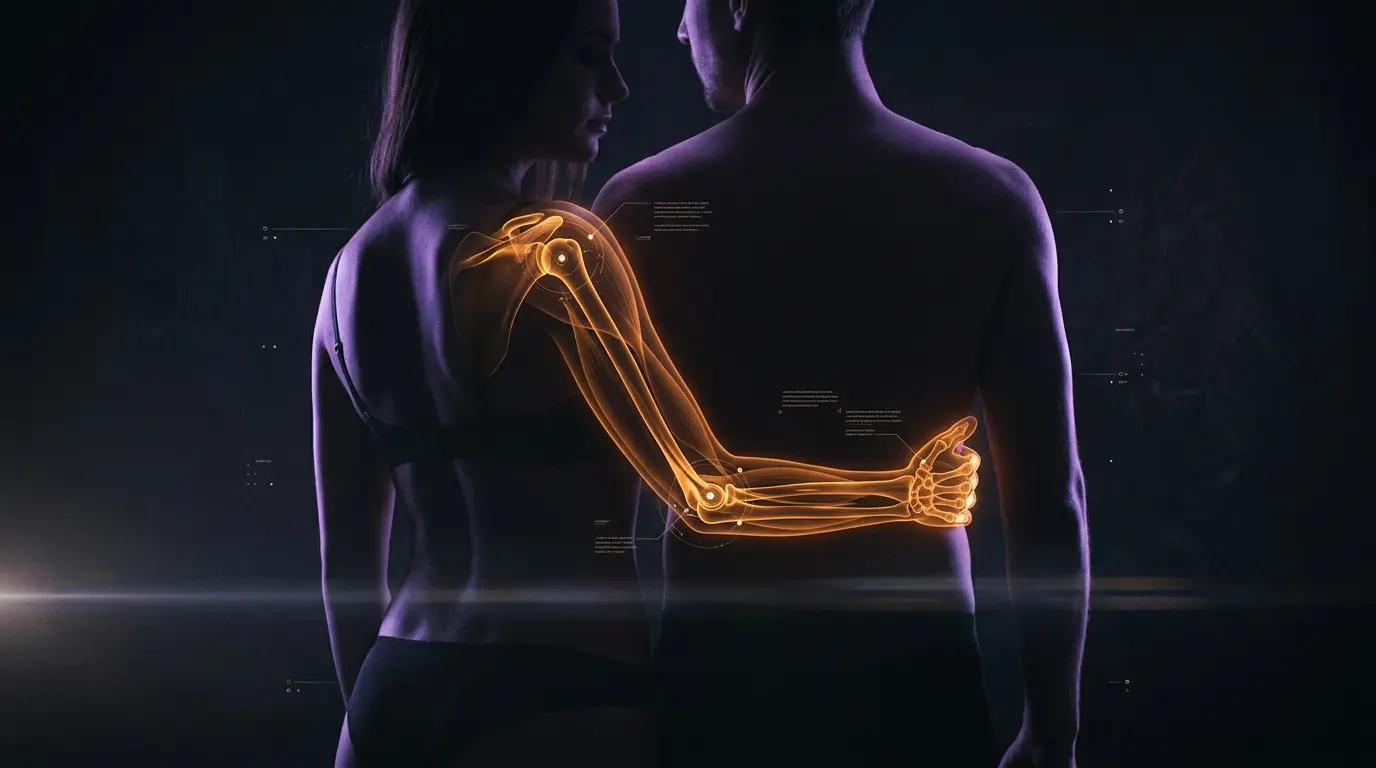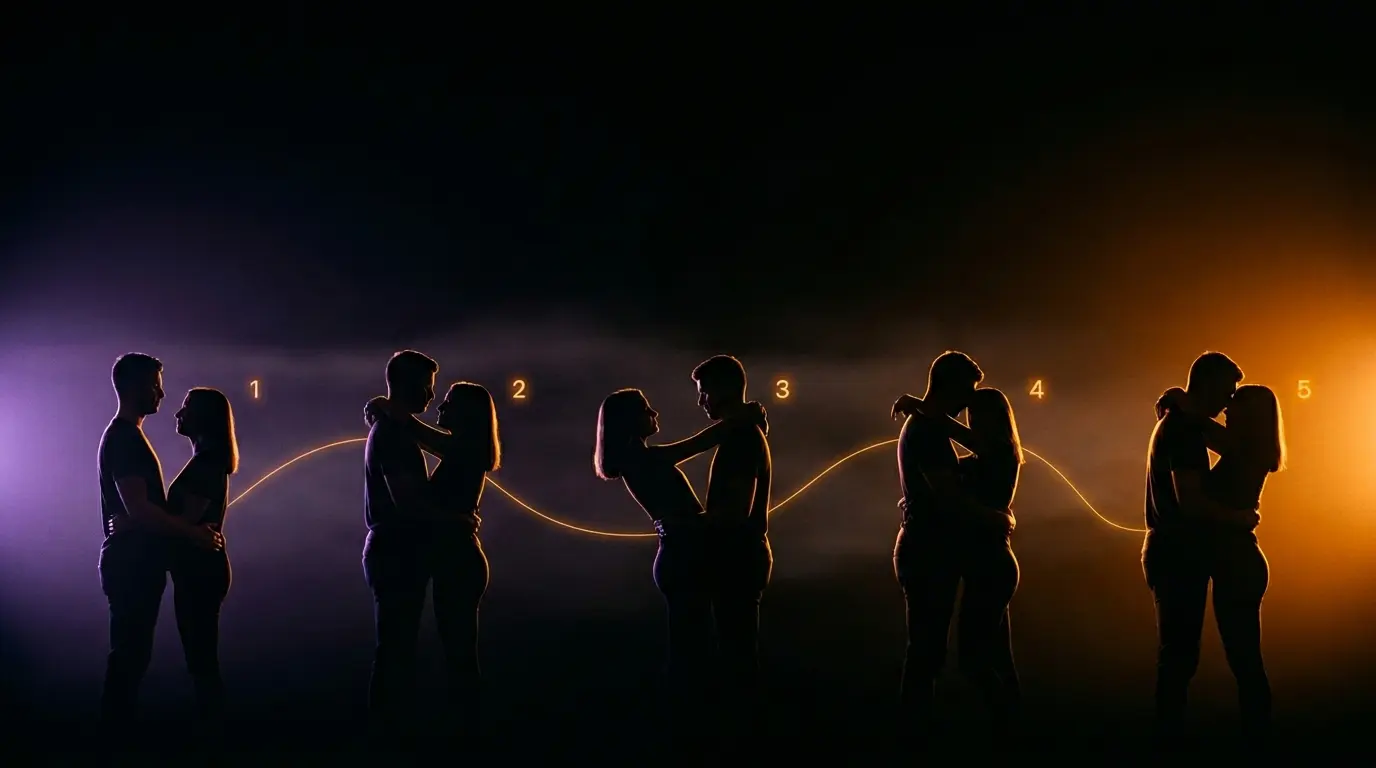
Most reach arounds fail because of position choice, not technique. A perfectly executed grip means nothing if the arm is pinned between two torsos, the wrist is bent past its functional range, or the shoulder fatigues within 90 seconds.
The physical workspace between two bodies — the volumetric gap where a hand can actually operate — determines everything: how long stimulation lasts, how consistent the pressure stays, and whether the experience builds toward climax or stalls into frustration.
This guide ranks 12 reach-around positions using a repeatable scoring system. Every position is evaluated for how well it supports sustained, high-quality manual stimulation — not for visual appeal or popularity.
Before you start: If you’re new to the reach around, begin with our complete beginner’s guide. For the foundational overview, see our Ultimate Guide to the Reach Around Handjob.
How We Ranked Position Difficulty
This ranking is built on repeatable mechanics, not preference. Each position is scored on three factors (1–10 scale):
1. Access Score (Arm Angle + Workspace)
Can the hand reach front-side sensitive zones without being blocked by torso, thighs, or mattress compression? A high score means the arm operates at a neutral angle with no physical obstructions.
2. Ergonomics Score (Fatigue Resistance)
Can the giving partner hold this position for 15+ minutes without shoulder burn, wrist cramping, or lower-back overload? Positions that force single-arm weight support score low.
3. Stimulation Score (Pressure Quality)
Can the hand apply consistent, rhythmic pressure with speed control and directional changes? A high score means the wrist has enough leverage to modulate technique without breaking flow.
The scoring system aligns with the grip mechanics covered in our Reach Around Grip Styles guide — matching position to grip is where real consistency comes from.
Difficulty Level 1 — Easiest (Zero Practice Needed)
These positions produce the highest-probability outcomes with the least physical demand. They maintain neutral spinal alignment, eliminate balance requirements, and create expansive workspaces for the reaching hand. Ideal for extended sessions, morning encounters, or anyone managing joint pain.

#1 Spooning (Side-Lying)
Score: Access 9/10 | Ergonomics 10/10 | Stimulation 8/10
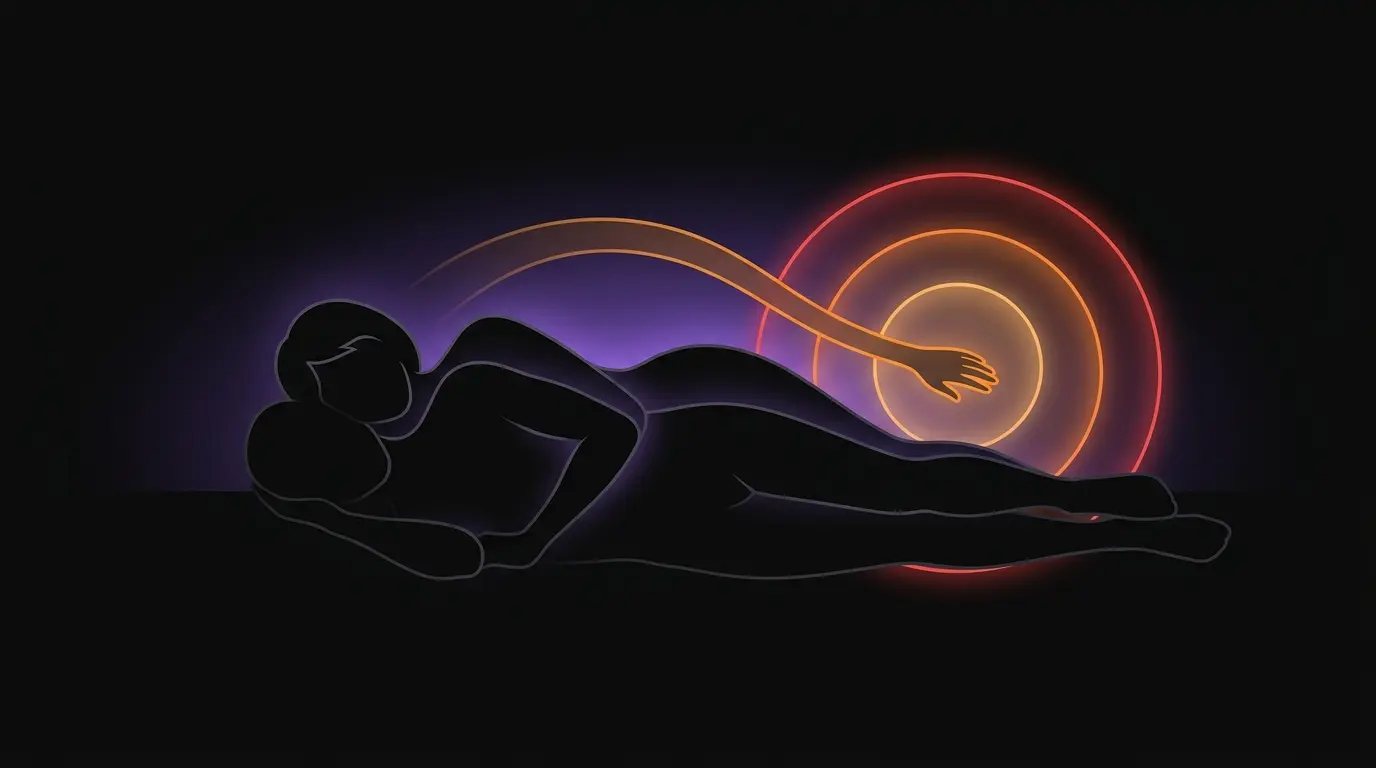
Both bodies are fully supported by the mattress. Zero balancing effort. The top arm naturally drapes across the receiver’s hip, landing directly on the anterior workspace with a completely neutral wrist angle.
Why it dominates Level 1:
- Shoulder and elbow stay at natural resting angles — no strain
- Core load is essentially zero — both partners can sustain this for 30+ minutes
- Easy to maintain unbroken contact during grip changes or tempo shifts
- Recommended for individuals with extension-intolerant lower-back pain
Grip pairing: The Basic Wrap or Thumb Rider from our grip styles guide work perfectly here because the relaxed arm position allows fine motor control.
Depth optimization: If penetration depth feels limited, the receiver can flex their knees toward their chest. This anterior pelvic tilt simultaneously opens the workspace further for the reaching hand.
#2 Seated Behind (Chair or Sofa)
Score: Access 9/10 | Ergonomics 9/10 | Stimulation 9/10
The giving partner sits upright on a stable surface. The receiving partner sits facing away, back resting against the giver’s chest. Both hands are completely free — no weight support needed.
Why the near-perfect scores:
- Gravity anchors both partners to a solid foundation
- Arms rest at a downward angle, maintaining unimpeded blood flow — eliminates the shoulder ischemia that destroys reach arounds in standing positions
- The hand approaches from above, mirroring natural solo stimulation mechanics
- The receiver controls depth and tempo using their legs, freeing the giver to focus entirely on manual precision
Key advantage over spooning: Two completely free hands. One can stimulate while the other explores secondary zones (inner thighs, lower abdomen, chest).
#3 Seated on Lap (Receiver Facing Away, Bed Version)
Score: Access 8/10 | Ergonomics 8/10 | Stimulation 8/10
Same mechanics as Seated Behind but without a rigid backrest. The giver sits with legs extended or crossed on the bed. Slightly more core engagement is required to stay upright.
Best use case: Medium-length sessions where intimacy and control are equally important.
Optimization tip: Elevating the receiver’s knees with a pillow underneath changes the pelvic angle, increasing both penetration depth and manual access simultaneously.
🏆 Essential for Every Position: Swiss Navy Silicone Lube
Long-lasting silicone formula that eliminates friction buildup during sustained reach-around sessions. Won't dry out during position changes.
Shop Swiss Navy Lube on EdenFantasys ➜Difficulty Level 2 — Intermediate (More Intensity, More Coordination)
Level 2 introduces gravitational challenges. One or both partners must support body weight actively. Stimulation quality can be excellent, but the giver must split physical focus between balance and manual precision.
#4 Standing Doggy Reach Around
Score: Access 7/10 | Ergonomics 6/10 | Stimulation 9/10
The receiver bends forward over a bed, table, or against a wall. The giver stands behind. Penetration depth is profound, but the reach around requires navigating underneath while maintaining bipedal balance.
Key challenge: Height mismatch. If the height difference is significant, the giver may experience lumbar flexion or shoulder strain. Use a stable surface at the right height to compensate.
Why the Stimulation Score is 9/10: The hand approaches from below, applying firm upward pressure directly against the target anatomy. This angle produces intense sensory feedback.
Grip pairing: The Reverse Grip or C-Clamp from our grip guide provide the strongest line of force from this angle.
#5 Kneeling Behind (Receiver at Bed Edge)
Score: Access 7/10 | Ergonomics 7/10 | Stimulation 8/10
The receiver kneels on the mattress with their pelvis at the edge. The giver stands or kneels on the floor behind them. The bed absorbs the receiver’s weight, creating much better stability than full standing variants.
Why many couples prefer this over standing doggy:
- Better stability = longer sessions
- Easier to maintain consistent pressure
- Gravity assists in shifting tissue for improved access and depth
- Less leg fatigue for both partners
Body type advantage: This position is particularly effective for couples where abdominal tissue would compress workspace in prone positions. Gravity naturally opens the pelvic corridor.
For a deeper biomechanical breakdown of these behind-angles, see our Positions & Angles guide.
#6 Side-Lying Face-to-Face
Score: Access 6/10 | Ergonomics 7/10 | Stimulation 7/10
Both partners lie on their sides facing each other with legs interwoven. Comfort and emotional connection are high, but workspace is tighter — the hand must navigate between two interlocking pelvic structures.
Best for: Slower pace, lower intensity, extended connection-focused sessions.
Watch out for: Wrist cramping. The compressed space can force the wrist into extreme flexion. If you notice numbness or tingling, switch to a flat-palm Slide technique rather than fingertip pressure.
💍 Hands-Free Upgrade for Intermediate Positions: Vibrating Cock Ring
Adds consistent vibration to the base, keeping stimulation active even when the hand needs to reposition during standing or kneeling setups.
Shop Vibrating Ring on EdenFantasys ➜Difficulty Level 3 — Advanced (Core Strength Required)
These positions demand significant core stabilization and precise timing. The physical barriers to manual stimulation are high — fatigue is the primary limiting factor.
#7 Traditional Doggy (All Fours)
Score: Access 6/10 | Ergonomics 5/10 | Stimulation 9/10
The most popular rear-entry position globally, but one of the hardest for a quality reach around. The giver must lean forward into lumbar flexion while extending an arm underneath the receiver’s torso — all while generating pelvic thrust.
The core strength tradeoff: If the giver can maintain pelvic balance without using their hands for support, the underhand angle against the target anatomy produces exceptional stimulation. If they can’t, the hand becomes a third support leg and stimulation quality collapses.
This is a common mistake — trying to reach around in doggy without adequate core control. For more on this, read 5 Common Reach Around Mistakes.
#8 Flat Prone (Face-Down / Prone Bone)
Score: Access 5/10 | Ergonomics 4/10 | Stimulation 7/10
The receiver lies completely flat on their stomach. Internal friction is intense, but the mattress eliminates nearly all workspace. The hand must slide underneath the receiver’s pubic bone against the downward force of their body weight.
Practical limit: Short bursts of 2–3 minutes. The wrist cannot flex properly, and fingers are restricted to micro-movements. Pair with a compact vibrator for consistent stimulation in this compressed geometry.
#9 Standing Face-to-Face
Score: Access 5/10 | Ergonomics 5/10 | Stimulation 6/10
Both partners are fully upright facing each other. The hand is crushed between two torsos during each thrust. If one partner is being lifted, both arms are needed for support — making a reach around anatomically impossible.
Only viable when: Both partners support their own weight and the giver can thread one arm between the bodies at hip level.
✨ Compact Power for Tight Spaces: Lustique Bullet Vibrator
When hand access is severely limited (prone, standing, or bridge positions), a compact bullet delivers targeted stimulation where fingers can't reach effectively.
Shop Lustique Bullet on EdenFantasys ➜Difficulty Level 4 — Expert Only (Niche Use Cases)
These positions fundamentally invert gravitational dynamics or compress workspaces to anatomical limits. Manual stimulation requires mastery of spatial awareness and often benefits from external tools.
#10 Reverse Cowgirl (Receiver on Top, Facing Away)
Score: Access 4/10 | Ergonomics 3/10 | Stimulation 8/10
The giver lies flat while the receiver straddles them facing away. To reach the anterior pelvis, the giver must perform a sustained abdominal crunch — fighting gravity with every second of contact. Stimulation quality is strong if the core holds, but fatigue is brutal.
#11 Modified Missionary (Legs Raised)
Score: Access 3/10 | Ergonomics 4/10 | Stimulation 7/10
The receiver’s legs are pushed back toward their chest. The thighs barricade the arm path, forcing the hand through a narrow shifting gap. Possible, but highly impractical for sustained reach-around quality.
#12 Bridge / Elevated Pelvis Variants
Score: Access 2/10 | Ergonomics 2/10 | Stimulation 6/10
The receiver holds a gymnastic bridge while the giver kneels between their legs. Any manual pressure destabilizes the bridge. The lack of grounding means upward hand force pushes the receiver away from the contact point. Acrobatic, but the least practical for real results.
Full Position Comparison Table
| Position | Access | Ergo | Stim | Best Grip | Difficulty |
|---|---|---|---|---|---|
| #1 Spooning | 9 | 10 | 8 | Basic Wrap / Thumb Rider | Level 1 |
| #2 Seated Behind | 9 | 9 | 9 | C-Clamp / Two-Finger Glide | Level 1 |
| #3 Seated on Lap | 8 | 8 | 8 | C-Clamp / Double Stack | Level 1 |
| #4 Standing Doggy | 7 | 6 | 9 | Reverse Grip | Level 2 |
| #5 Kneeling Bed Edge | 7 | 7 | 8 | Reverse Grip / Corkscrew | Level 2 |
| #6 Side-Lying Face-to-Face | 6 | 7 | 7 | Two-Finger Glide | Level 2 |
| #7 Traditional Doggy | 6 | 5 | 9 | Reverse Grip | Level 3 |
| #8 Flat Prone | 5 | 4 | 7 | Flat Palm Slide | Level 3 |
| #9 Standing Face-to-Face | 5 | 5 | 6 | Two-Finger Glide | Level 3 |
| #10 Reverse Cowgirl | 4 | 3 | 8 | C-Clamp | Level 4 |
| #11 Modified Missionary | 3 | 4 | 7 | Two-Finger Glide | Level 4 |
| #12 Bridge / Elevated | 2 | 2 | 6 | Reverse Grip | Level 4 |
Grip names reference: Each grip technique is fully broken down with execution steps in our Reach Around Grip Styles guide.
How to Switch Positions Without Losing Momentum
The biggest arousal drops happen during transitions, not during execution. When stimulation stops abruptly, the neurochemical momentum (dopamine, oxytocin, vasocongestion) decays rapidly.

The 3-Second Rule
When fatigue sets in or workspace collapses, don’t linger. Count 3-2-1 and transition decisively.
- Pre-contact overlap: Start the new hand position before fully releasing the old one
- Move decisively: Roll from Traditional Doggy (Level 3) into Spooning (Level 1) in under 2 seconds
- Never force a failing position — early transition preserves arousal better than struggling through pain
Re-Lube During Every Transition
Different positions expose different tissue areas. Applying lubricant exactly at the moment of transition serves a dual purpose:
- Prevents micro-friction from the new angle
- The tactile sensation of application acts as a sensory bridge — the brain registers it as continued intimacy rather than a pause
This transition strategy directly addresses one of the 5 most common reach-around mistakes — holding a failing position too long.
Which Position Should You Start With?
If you’re a complete beginner: → Start with Spooning. Read our beginner’s walkthrough first.
If you want the best all-around control: → Seated Behind on a stable chair. Highest combined score in the table.
If you want more intensity with moderate effort: → Kneeling Behind (Bed Edge). Strong depth + sustainable ergonomics.
If you have advanced core strength: → Traditional Doggy with deliberate core control. Master the step-by-step execution first.
If workspace is severely limited (prone, bridge): → Supplement with a compact vibrator. Manual-only reach arounds in Level 3–4 positions are unsustainable beyond 2–3 minutes.
Frequently Asked Questions
What is the easiest reach-around position?
Spooning (side-lying) and Seated Behind (chair/sofa) are the easiest. Both eliminate the need to support body weight, keep the arm at a neutral angle, and prevent the shoulder fatigue that destroys reach-around quality in standing or prone positions.
What is the best position for a reach around from behind?
Seated Behind offers the best combination of access, ergonomics, and stimulation. Kneeling Behind (bed edge) is the strongest option for deeper penetration with sustained manual contact. For a complete analysis of behind-angles, see our Positions & Angles guide.
Does position really affect how the reach around feels?
Yes — profoundly. Position determines wrist angle, finger leverage, and how long consistent rhythm can be maintained. A relaxed arm at 90° (spooning) delivers dramatically better sensory feedback than a fully extended arm fighting gravity (traditional doggy).
Which position works best for different body types?
Positions that compress torsos together (Flat Prone, Standing Face-to-Face) eliminate workspace for larger body types. Kneeling Behind (Bed Edge) and Seated Behind use gravity to shift tissue and open the pelvic corridor, making the reach around accessible regardless of body composition.
Is a standing reach around better than spooning?
Standing can feel more intense due to the upward hand angle, but spooning is far more sustainable and reliable for longer sessions. For most couples, spooning produces better cumulative results because stimulation stays consistent for 15–30 minutes vs. 3–5 minutes standing.
Key Takeaways
- The best reach-around position preserves both access and endurance — not just one
- Level 1 positions (Spooning, Seated Behind) produce the highest consistency for most couples
- Level 2 positions add intensity but require better balance and coordination
- Transitions are critical: overlap contact, switch within 3 seconds, re-lube strategically
- Position + grip matching improves control more than speed or pressure alone — use our grip guide to find the right pairing
- For Level 3–4 positions, supplement with a compact vibrator to maintain stimulation when manual access is limited
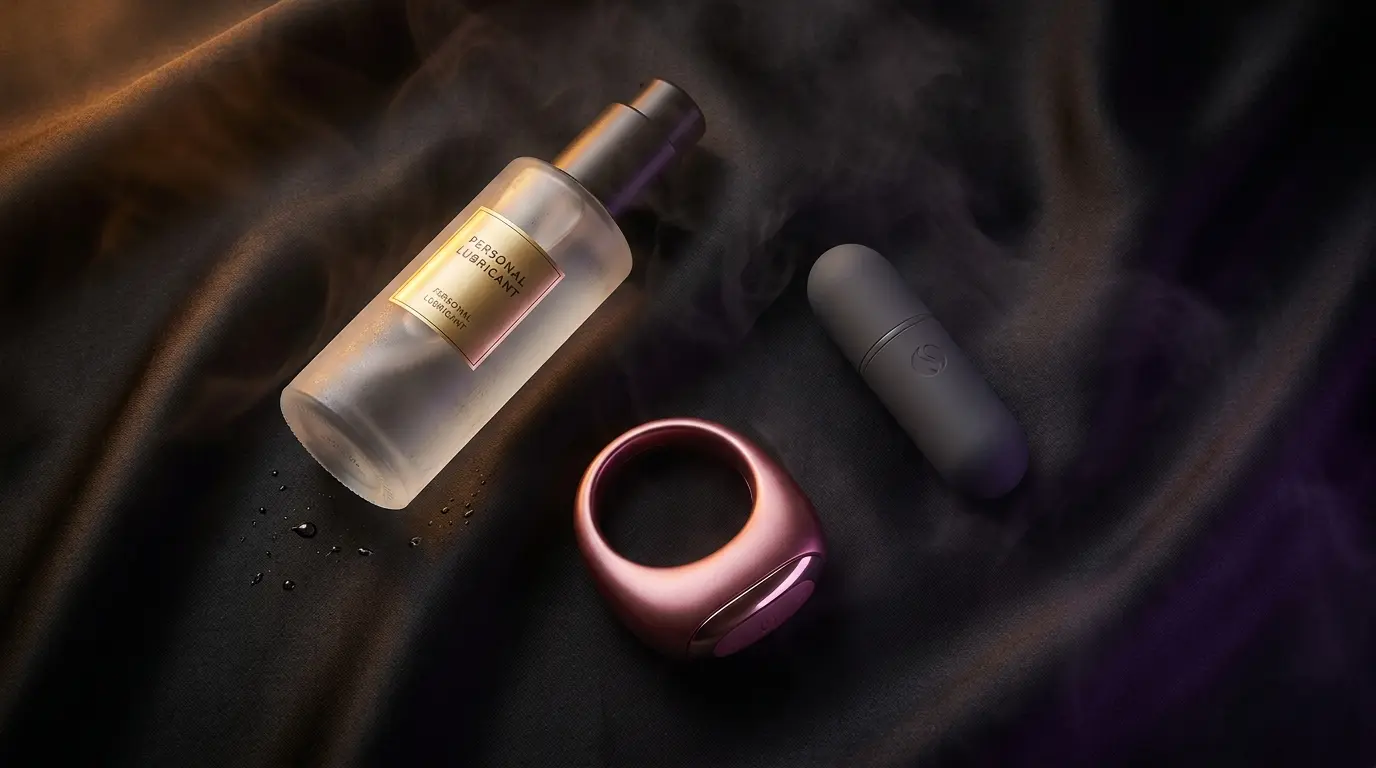
🛒 Build Your Reach-Around Kit
Silicone lube for friction-free transitions. Vibrating ring for hands-free base stimulation. Compact bullet for tight-workspace positions. Start with one, build from there.
Browse the Full Collection on EdenFantasys ➜